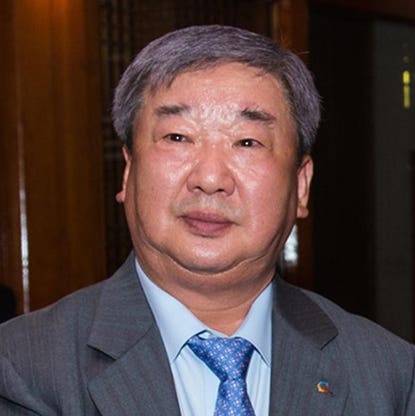
Koo Bon Neung Net Worth: Is He a South Korean Billionaire?
The question of an individual's net worth often sparks considerable public interest, especially when that individual is believed to hold a significant position or influence. In South Korea, a nation known for its dynamic economy and powerful conglomerates, the financial standing of prominent figures is frequently a topic of discussion. One such figure whose financial status has piqued curiosity is Koo Bon Neung. But does his wealth place him in the esteemed ranks of South Korean billionaires? The journey to uncover Koo Bon Neung net worth involves navigating the often opaque world of private wealth, public records, and the inherent challenges in precise financial estimation.
For many, the term "billionaire" conjures images of Forbes or Bloomberg lists, meticulously compiled and updated. However, not every wealthy individual, even those with substantial assets, makes it onto these globally recognized rankings. The absence of a name from such a list doesn't automatically mean a person isn't a billionaire; rather, it often highlights the complex methodologies and public disclosure requirements that underpin these estimations. In the case of Koo Bon Neung, a deep dive into publicly available information becomes essential to shed light on his financial standing and address the central question of his billionaire status.
Unraveling the Mystery: What Public Records Reveal (or Don't)
Ascertaining the precise net worth of any individual, particularly one who isn't the CEO of a publicly traded company or a globally recognized celebrity with transparent financial dealings, presents significant challenges. For figures like Koo Bon Neung, who may operate within less public spheres, the task becomes even more intricate. Major financial publications like Forbes and Bloomberg meticulously track and estimate the wealth of the world's richest individuals, relying on a combination of public stock holdings, private company valuations, real estate assets, and other disclosed financial data. However, for a name to appear on these elite lists, there usually needs to be substantial, verifiable public information.
When we examine prominent lists of South Korean billionaires, such as those compiled by Wikipedia based on reputable sources, the name Koo Bon Neung does not consistently appear. This observation is a crucial starting point in our investigation. While the absence from such a list doesn't definitively rule out a person's billionaire status, it strongly suggests that their wealth, if it indeed reaches that echelon, is either not publicly disclosed to the extent required for such an estimation or falls below the threshold typically considered by these global wealth trackers. The same pattern emerges when cross-referencing other public aggregators or celebrity net worth sites; while some might mention various individuals and their financial standings, detailed analytical articles or specific entries on major billionaire registers often omit certain names, including Koo Bon Neung's, from explicit 'billionaire' categories.
The inherent difficulty stems from the fact that much of an individual's wealth can be tied up in private ventures, closely held family businesses, real estate, or other investments that are not subject to public reporting requirements. Unlike the founders of major tech companies whose stock holdings are transparent, individuals with diversified private assets can maintain a considerable degree of financial privacy. This privacy makes a definitive declaration regarding Koo Bon Neung's precise net worth or his status as a South Korean billionaire through public records alone exceedingly difficult, pushing us to consider broader economic and familial contexts that might influence his financial standing. To delve deeper into this aspect, consider exploring Koo Bon Neung Net Worth: What Available Public Lists Reveal.
The South Korean Chaebol Landscape and Wealth Dynamics
To truly understand the potential for significant wealth in South Korea, one must consider the unique economic landscape dominated by chaebols – large, family-controlled business conglomerates. Names like Samsung, Hyundai, LG, and SK are not just companies; they are dynasties that have shaped the nation's economy for decades. These groups are characterized by complex ownership structures, often involving cross-shareholdings between various subsidiaries, making it challenging to trace individual family members' ultimate wealth. Given the prominent "Koo" surname, which is famously associated with the LG Group, it's natural for speculation to arise regarding any individual bearing that name and their potential connection to vast family fortunes.
However, simply sharing a surname does not automatically confer billionaire status or a direct share in a major chaebol's primary holdings. While many scions of these families do inherit significant wealth and leadership roles, the internal distribution of assets, ownership percentages, and even the definition of "family member" can be highly intricate and private. Some individuals might hold substantial wealth through various investments, private equity, or successful entrepreneurial ventures that are entirely separate from the main family conglomerate, while others might have indirect stakes that don't translate into a publicly visible billionaire net worth. The South Korean economy, while mature, still offers avenues for new wealth creation, but much of the extreme wealth concentration remains tied to these legacy family structures. Therefore, without specific, verifiable links to major shareholdings in publicly traded companies or significant private enterprises known to generate billions, attributing a billionaire net worth based solely on a surname or general prominence would be speculative.
Distinguishing Public Figures from Private Fortunes
It's also important to distinguish between being a public figure or a successful professional and being a billionaire. Many individuals achieve considerable success in their careers—whether in business, academia, arts, or philanthropy—and accumulate substantial assets. Their contributions may be widely recognized, and their influence significant. However, their personal wealth might be substantial yet fall short of the billion-dollar mark. The threshold for billionaire status is incredibly high, requiring not just a comfortable lifestyle or even millions, but a personal fortune that often involves controlling vast enterprises, extensive real estate portfolios, or significant financial investments globally. For someone like Koo Bon Neung, public interest might stem from professional achievements or social standing, which are not always directly commensurate with a billion-dollar net worth.
Deconstructing a Net Worth Estimate: What Goes Into It?
Estimating an individual's net worth is a complex financial exercise that involves a comprehensive assessment of all assets minus all liabilities. For a true billionaire, this typically means a colossal portfolio. Here's a breakdown of what a thorough analysis would entail:
- Assets:
- Publicly Traded Stocks: Shares in companies listed on stock exchanges.
- Private Company Holdings: Ownership stakes in unlisted businesses, often valued through revenue multiples, discounted cash flow, or comparable company analyses.
- Real Estate: Residential properties, commercial buildings, land, and other real estate investments.
- Financial Instruments: Bonds, mutual funds, hedge funds, and other investment vehicles.
- Intellectual Property: Patents, copyrights, trademarks, and royalties.
- Luxury Assets: Art collections, yachts, private jets, and other high-value personal possessions.
- Cash and Equivalents: Bank balances and highly liquid investments.
- Liabilities:
- Debt: Mortgages, personal loans, business loans, and other forms of borrowing.
- Taxes: Outstanding tax obligations.
- Other Obligations: Any other financial commitments.
The challenge in assessing analyzing Koo Bon Neung's net worth from public records lies precisely in the lack of transparent information across many of these categories. Without access to detailed financial statements, private business valuations, or comprehensive asset declarations, any estimate would be purely speculative. Publications that provide these figures for billionaires often have teams of researchers and forensic accountants dedicated to uncovering this information, often with the cooperation (or at least tolerance) of the individuals themselves.
Tips for Researching Wealth (When Information is Scarce)
For those interested in understanding the financial standing of individuals where direct declarations are absent, a multi-faceted research approach is key, albeit with inherent limitations:
- Company Directorships: Look for affiliations with major companies, especially those publicly traded, and examine their annual reports for director compensation or significant shareholdings.
- Media Reports & Interviews: High-quality financial news outlets might occasionally publish profiles or analyses that hint at an individual's wealth or business ventures.
- Philanthropic Activities: Large charitable donations or foundation endowments can sometimes be an indicator of substantial wealth, as these figures are often publicly declared.
- Public Property Records: In some jurisdictions, property ownership and value can be publicly searched, offering a glimpse into real estate assets.
- Academic or Professional Publications: While less direct, insights into an individual's industry influence or successful ventures can be gleaned from professional journals or conference proceedings.
However, it's crucial to remember that even with diligent research, much of an individual's private wealth can remain hidden, especially if they prioritize privacy and operate outside of publicly reportable structures. The ability to definitively declare someone a billionaire without their explicit disclosure or transparent financial activities is rare.
The Verdict: Is Koo Bon Neung a South Korean Billionaire?
Based on the available public information and the common methodologies used by reputable financial publications to identify billionaires, a definitive "yes" or "no" to the question of Koo Bon Neung's billionaire status remains elusive. While the curiosity surrounding Koo Bon Neung net worth is understandable given the allure of significant wealth, there is no consistent evidence in prominent global or South Korean billionaire lists that confirms his inclusion among the ultra-rich.
This absence suggests several possibilities: either his net worth, while potentially substantial, does not reach the billion-dollar threshold according to the metrics used by these wealth trackers; his wealth is predominantly held in private, non-disclosed assets that make precise estimation impossible for public researchers; or he simply maintains an exceptionally private financial profile. The landscape of wealth in South Korea, deeply intertwined with powerful family conglomerates and complex ownership structures, further complicates the task of external valuation. While the "Koo" surname carries historical significance, it doesn't automatically translate into a public billionaire status for every individual bearing it.
Conclusion
The quest to determine Koo Bon Neung's net worth and his potential status as a South Korean billionaire highlights the inherent challenges in assessing private wealth in an increasingly complex global economy. While public fascination with immense fortunes is natural, the reality is that much significant wealth remains shielded from public scrutiny. For Koo Bon Neung, the lack of his presence on widely recognized billionaire lists indicates that, at least from a publicly verifiable standpoint, his financial standing has not been definitively placed in the billion-dollar category by major financial institutions. This does not preclude the possibility of considerable wealth, but rather underscores the limits of public information when attempting to quantify the fortunes of individuals who may prefer to keep their financial details private. Ultimately, the true measure of one's wealth can often remain a personal secret, known only to the individual and their closest financial advisors.